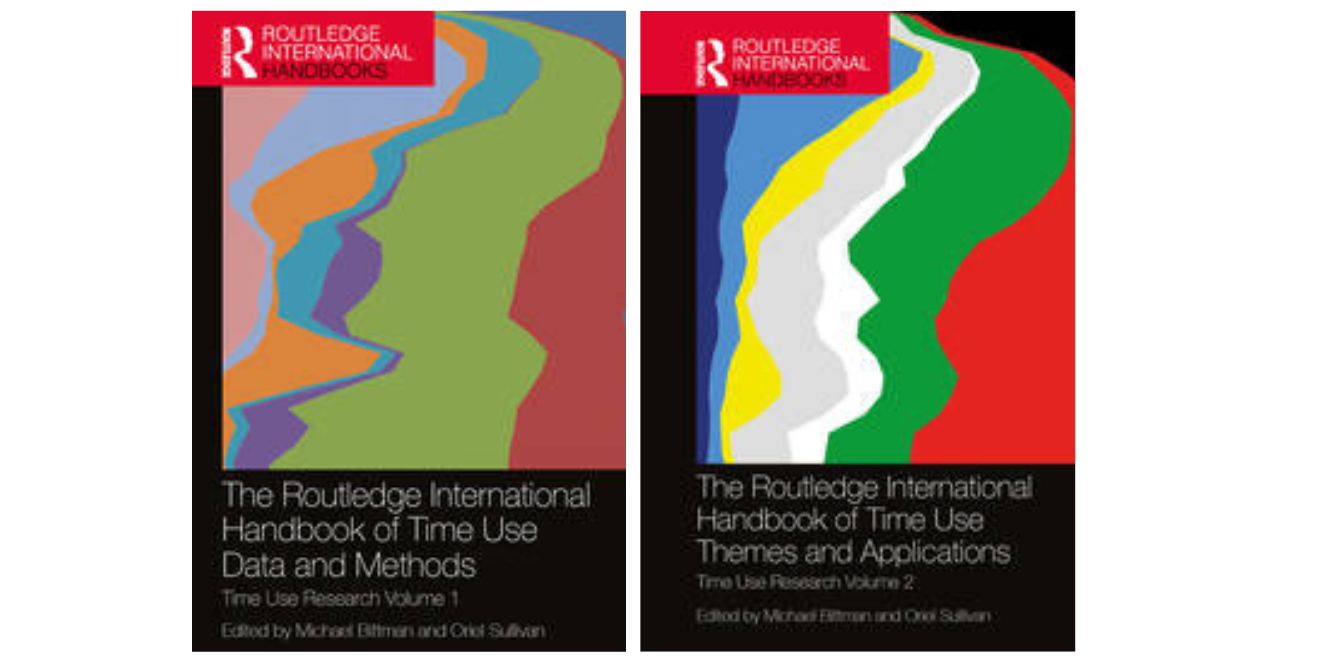
Professor Oriel Sullivan and Emeritus Professor Michael Bittman recently co-edited a two-volume Handbook on Time Use in Routledge's International series. Written by leading international scholars, the handbook provides the most comprehensive and up-to-date reference work on the collection, analysis, and application of time use data.
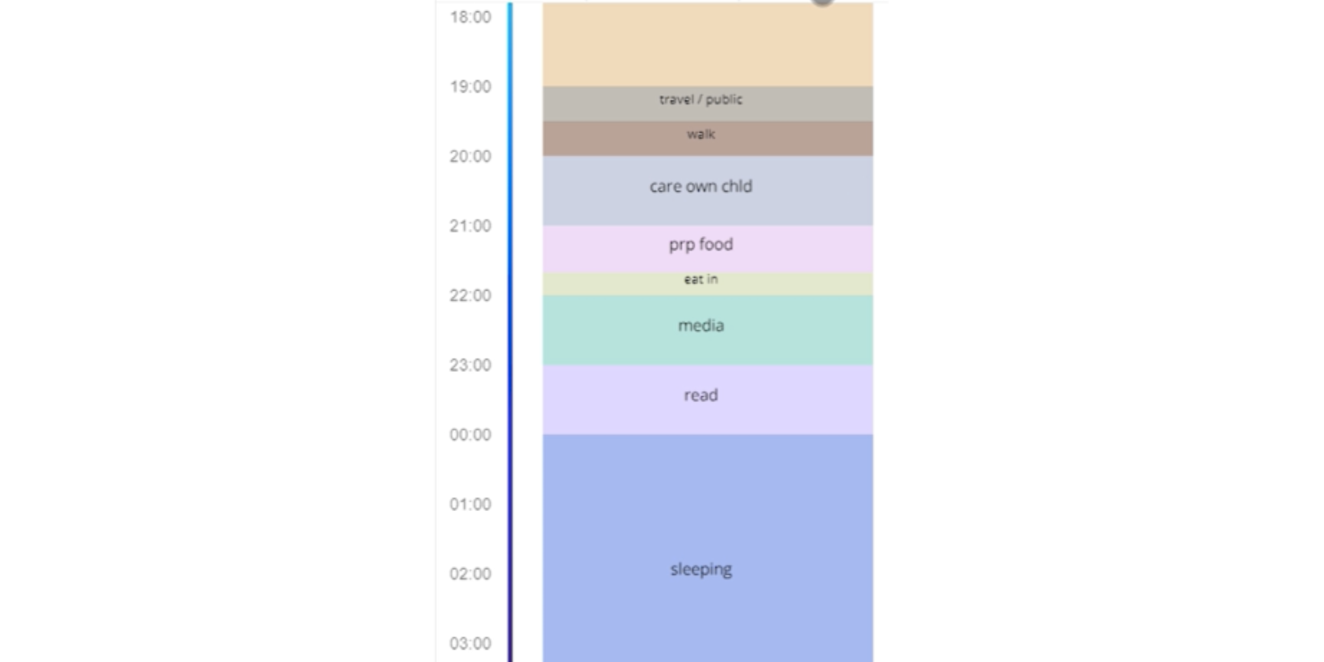
Time is a crucial yet finite social resource, fundamental to processes of growth, equality, and well-being. Much of the world’s essential production—raising children, preparing food, household maintenance—occurs within households, and relies on time, rather than monetary exchange, as its central input. Despite its centrality, this non-market dimension is often overlooked in official indicators. Time use diary data is increasingly recognised as the foremost source of reliable information on these key temporal dimensions of daily life.
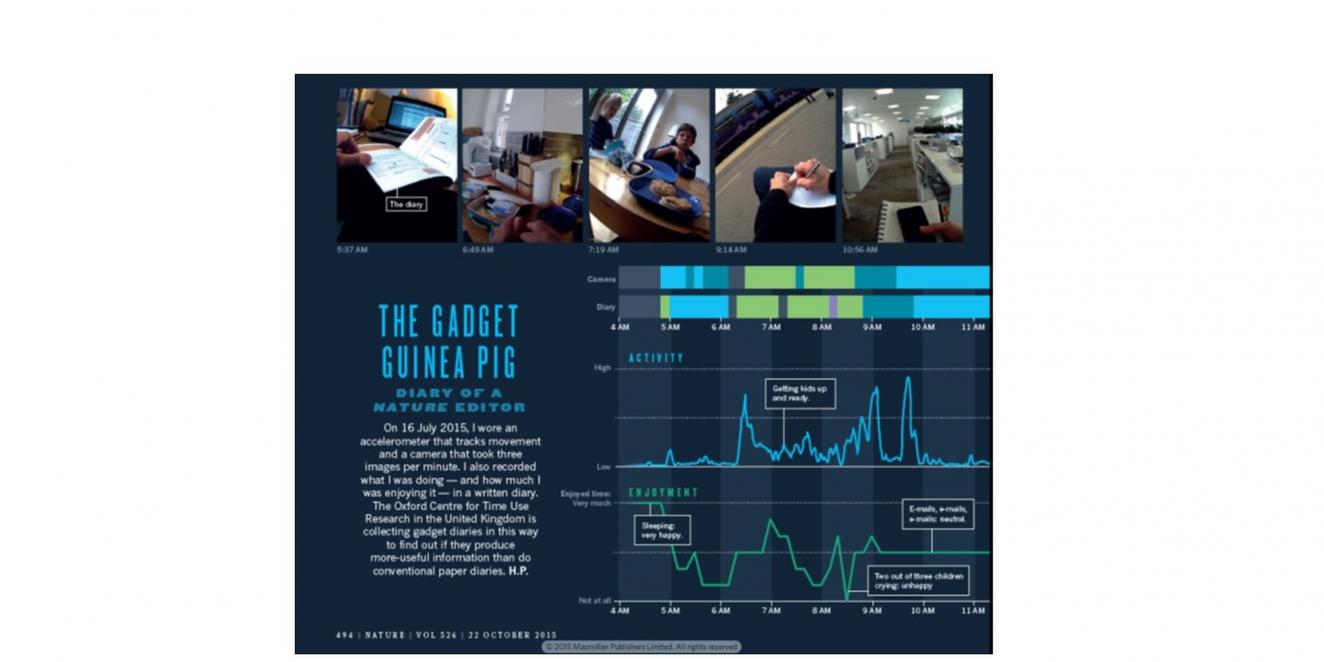
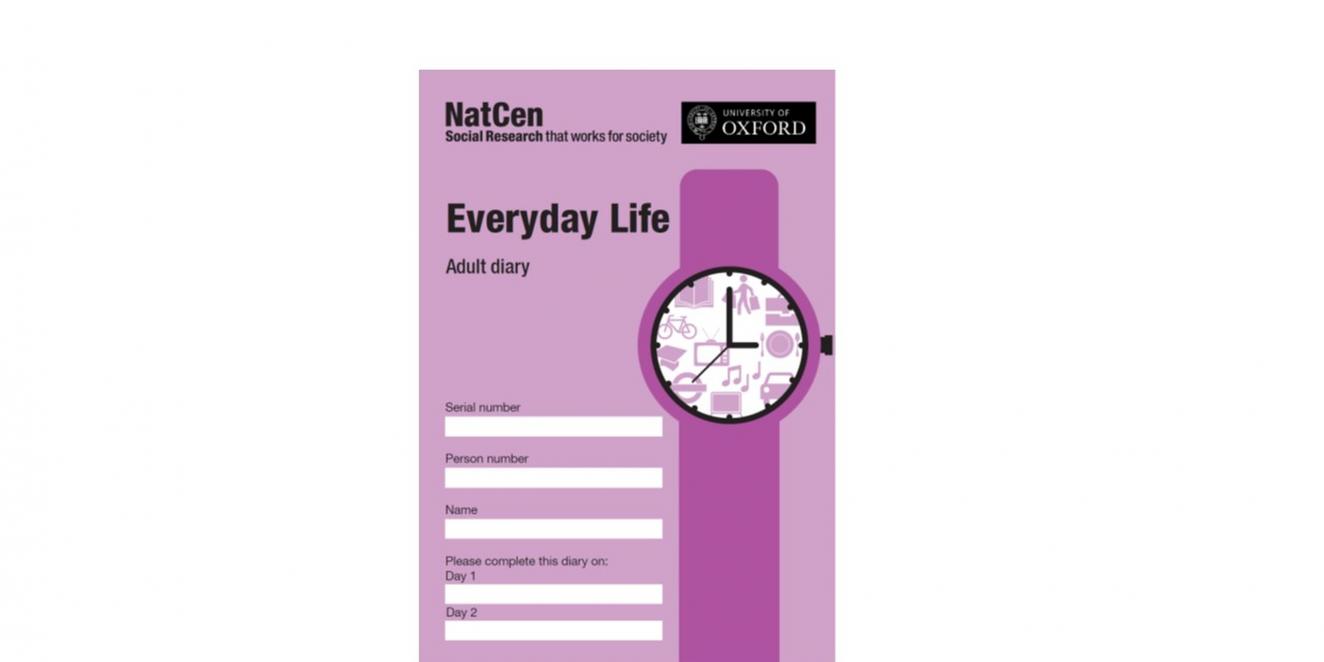
The first volume addresses methodological issues concerning the collection and analysis of data. Readers are introduced first to general methodology and design issues, followed by an overview of major time use diary surveys that are available worldwide, and an exploration of the innovations in design that are currently under development.
With a focus on practical knowledge and understandings of how to collect, manage and analyse this type of data, it will be a valuable point of reference for students and scholars with interests in the methodological aspects of time use research, and will be relevant to numerous fields including sociology, demography, social policy, economics, gender studies, psychology, leisure studies, public health, and related disciplines.
The second volume of the handbook provides an authoritative outline of the contribution of time-use research to key contemporary scholarly and policy applications in both the Global North and the Global South.The chapters consist of a wide-ranging selection of exemplary contributions chosen to illustrate the varied areas of substantive empirical research for which time use diary data has been used in research across the globe, including gender and life-course studies, research on employment and the labour force, care-giving, and contributions to the measurement of both population well-being and sustainable development goals.